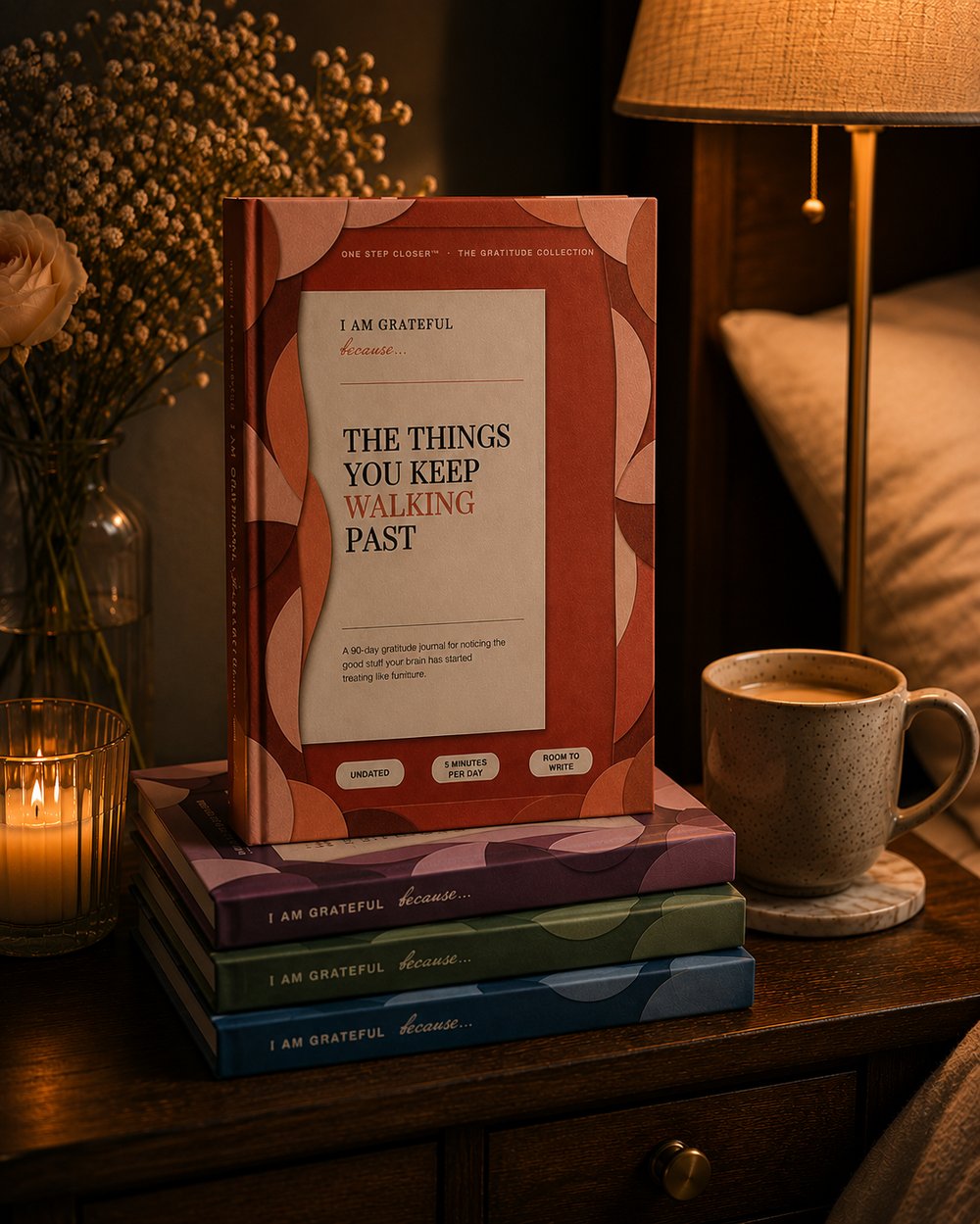
You don't need another gratitude journal that lets you name it and move on. Naming the thing is the easy part. The why is what makes it actually stick.
There's a version of gratitude that's become furniture. The same three things, most mornings — coffee, the dog, my bed — written fast, half-conscious, more habit than noticing. It's not that you stopped believing gratitude does anything. It's that your brain found the shortcut, and a shortcut repeated enough times stops registering as anything at all. You can write "grateful for my partner" for six months straight and feel nothing new about your partner in any of those six months.
Most gratitude journals don't fight this. They ask the same question every day, which trains you to give the same answer every day, which is exactly the autopilot the practice was supposed to interrupt in the first place.
Why the "why" is the part that works
The thing that actually breaks autopilot isn't a longer list. It's a why. Not "I'm grateful for my morning coffee" — but what that ten minutes with a warm mug actually does for you before the day starts asking things of you. The list is data your brain already has. The why is the part that makes your brain go looking for something it hasn't already filed away.
What changes when you notice the why
Something specific happens when you have to answer why something matters instead of just naming it: you have to actually look at it again. The mug isn't just a mug anymore — it's the one static point in a morning that otherwise starts moving the second you're awake. That's not a bigger insight than "grateful for coffee." It's the same fact, examined instead of filed. And examined facts are the ones that actually change how a day feels, not just how a page looks.
This is the whole premise behind a 90-day practice that keeps changing the question underneath it: not more gratitude, but gratitude that has to be looked at freshly each time, so it never quite gets the chance to become furniture again.
The Things You Keep Walking Past
A 90-day gratitude journal for noticing the good stuff your brain has started treating like furniture — designed so you can't autopilot past your own life.